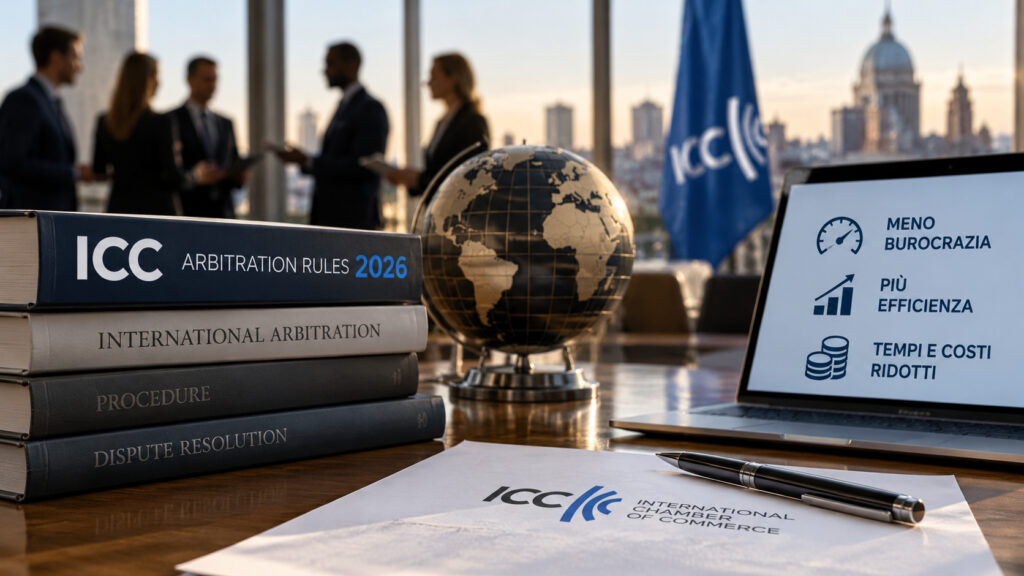
The new ICC Arbitration Rules 2026 aim to simplify proceedings and reduce the time and cost of international commercial disputes.
ICC Arbitration Rules 2026: What Changes from 1 June
International commercial dispute resolution reached a significant milestone when the new International Chamber of Commerce (ICC) arbitration rules entered into force on 1 June 2026. Claudia Salomon, President of the ICC International Court of Arbitration, examined the reform in “ICC — Rewriting the Rules of Arbitration”, dated 19 October 2026. The changes address a pressing business need: simpler, faster and more affordable proceedings.
However, international commercial arbitration has faced growing concerns about formal requirements and rising costs. Businesses value its confidentiality and neutral forum, yet they also need procedures that work efficiently. The new ICC provisions respond by reshaping the procedural framework around practical case management.
ICC Arbitration Rules 2026: Obligations, Best Practices and Tools
In particular, the reform draws a clear distinction between three categories of procedural provisions. Understanding their different functions helps parties and arbitrators organise the case without unnecessary formalities.
Binding Procedural Obligations
Unlike recommendations, procedural obligations form the mandatory core that parties and arbitral tribunals must observe. They establish duties for the conduct of the arbitration. In particular, parties must act in good faith and promptly, while arbitrators must keep the case moving and address delaying tactics.
Best Practices
In addition, best practices guide participants towards fair and transparent conduct. For example, they provide useful benchmarks for procedural behaviour and practical models for exchanging submissions and managing hearings. They help participants choose an effective approach within the applicable framework.
Dispute Management Tools
At the same time, parties and tribunals have access to a flexible set of dispute management tools. These procedural options allow them to tailor the arbitration to the needs of the case. As a result, the process can reflect the actual complexity of the dispute without unnecessary burdens.
ICC Arbitration Rules 2026 and the Terms of Reference
One of the most significant practical changes concerns the Terms of Reference, traditionally known in Italian arbitration practice as the Atto di Missione.
Previously, preparing this document was a key preliminary stage in ICC arbitration, but it could also cause delays. The parties and tribunal signed it to identify the issues for determination and the procedural framework. In some cases, negotiating its wording became a lengthy exercise before the merits could advance.
Under the ICC Arbitration Rules 2026:
- The Terms of Reference are no longer a mandatory step in every ICC arbitration.
- The tribunal and parties can dispense with them where the nature of the dispute does not require their use.
- Removing this formality can allow the case to progress more quickly towards evidence and the merits.
| Area of reform | Previous approach | ICC framework from 1 June 2026 | Practical impact |
|---|---|---|---|
| Terms of Reference | A mandatory preliminary stage in ICC arbitration | No longer mandatory in every proceeding | A simpler start and shorter preliminary stages |
| Types of provisions | A more uniform procedural framework | Clear distinction between obligations, best practices and tools | Greater clarity and procedural flexibility |
| Time management | Exposure to delaying tactics | Active prevention of unnecessary delay | Greater responsibility for the timetable |
| Cost control | Fragmented responsibility | Direct responsibility for parties and arbitrators | More affordable dispute resolution |
| Arbitration clauses | Standard wording | Clauses tailored to cross-border contracts | Better planning for effective contractual protection |
ICC Arbitration Rules 2026: Controlling Costs and Delays
For this reason, affordability is central to the reform discussed by Claudia Salomon. The ICC Arbitration Rules 2026 address the financial burden of cross-border proceedings through two complementary approaches.

Actively Preventing Delays
In particular, the framework gives arbitrators clearer tools to address delaying or redundant requests. Closer monitoring of procedural deadlines also aims to prevent evidence gathering from continuing beyond what the dispute requires. Consequently, case management becomes a continuing responsibility throughout the proceedings.
Taking Direct Responsibility for Costs
Therefore, cost management is an active duty rather than a passive consequence of the dispute. Both parties and arbitrators have a role in keeping spending proportionate:
- Arbitrators should frame procedural orders with the amount in dispute in mind.
- Parties should avoid groundless objections and excessive document production, which may affect the allocation of costs.
ICC Arbitration Rules 2026: Guidance for Italian Businesses
Against this background, the changes matter to Italian businesses trading internationally. Made in Italy companies and industrial groups regularly use arbitration clauses in cross-border sales, distribution, joint venture and construction contracts.
Drafting Arbitration Clauses
However, simply referring to an arbitration rulebook does not guarantee savings. Businesses should consider the arbitration clause during contract negotiations, when they can still agree on a procedure suited to their transaction. Three aspects deserve attention.
1. Choosing the applicable rules. An express choice of the ICC Arbitration Rules 2026 can give parties access to the revised framework, including the removal of mandatory Terms of Reference in every case.
2. Tailoring the procedure. A clause can address dispute management tools and emphasise compliance with procedural obligations. The aim is to match the process to the likely dispute and the value of the contract.
3. Planning effective protection. Careful, tailored drafting can influence the duration of proceedings, legal costs and the predictability of a commercial transaction. As a result, procedural planning belongs alongside the negotiation of the substantive terms.
ICC Arbitration Rules 2026: Frequently Asked Questions
When did the new ICC arbitration rules enter into force?
The new ICC arbitration rules entered into force on 1 June 2026.
Are Terms of Reference still mandatory in every ICC arbitration?
No. A significant change in the 2026 framework removes the requirement to prepare Terms of Reference in every arbitration. Parties and tribunals can use the appropriate procedural approach for the dispute.
How does the framework distinguish procedural provisions?
It distinguishes three levels: binding procedural obligations, guidance in the form of best practices, and dispute management tools that help parties tailor the arbitration.
How can the changes affect costs for Italian businesses?
In summary, the framework promotes cost control through direct responsibility for parties and arbitrators and the prevention of delays. Well-drafted arbitration clauses can help businesses use these options effectively, although actual costs depend on the case.
Source: ICC — Rewriting the Rules of Arbitration, 19 October 2026, analysis by Claudia Salomon, President of the ICC International Court of Arbitration.
For further information, consult the official ICC Arbitration Rules 2026. Also explore LexFocus coverage of international business and our practical legal guides.