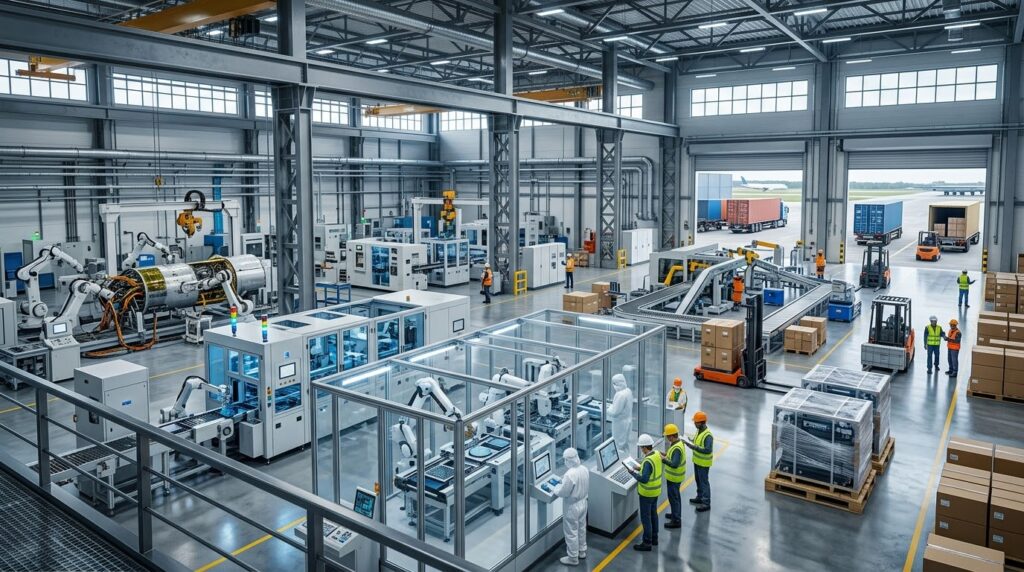
High-tech products underpin Europe’s trade surplus. The United States anchors export demand. Meanwhile, China dominates inbound electronics supply. Therefore, corporate counsel should review supply contracts, IP protection and export controls.
High-Tech Products: Key Figures
- What Changes: EU high-tech exports reached €566.5 billion in 2025, against imports of €534.1 billion. The resulting surplus was €32.4 billion. The United States was the largest export market. China and the United States remained the main external suppliers.
- Why It Matters: The figures help businesses review supply agreements, licensing, intellectual property and export controls. They introduce no new rules. However, they reveal where supplier dependencies may require stronger contractual safeguards.
BRUSSELS — High-tech products generated a €32.4 billion EU trade surplus in 2025. Exports reached €566.5 billion, while imports totalled €534.1 billion. Eurostat published the figures on 6 October 2026. The data confirms a second consecutive annual surplus after the deficits recorded from 2020 to 2023.
Total extra-EU trade in high-tech products almost doubled between 2015 and 2025. Imports and exports together rose from €595 billion to €1,101 billion. This represents average annual growth of 6.3%. Moreover, these goods accounted for 21.4% of EU exports and 21.1% of extra-EU imports in 2025. Sold EU production reached €532 billion.
However, the overall surplus conceals sharp differences between trading partners. For legal practitioners and trade advisers, these figures help identify supply chain exposure. They also highlight where commercial contracts, intellectual property and compliance deserve closer attention.
High-Tech Products: Europe’s Trade Architecture
Eurostat’s datasets reveal a divided trade landscape for high-tech products. Western markets drive export demand. However, European manufacturers still rely on concentrated overseas supply routes for critical hardware.
The United States received 34.4% of extra-EU high-tech exports in 2025. The United Kingdom followed with 9.3%, ahead of China with 8.5%. Pharmaceuticals generated a bilateral surplus of about €77 billion with the United States. Scientific instruments, aerospace equipment and specialised electronics also support European exports.
Meanwhile, two countries supplied more than half of extra-EU high-tech imports. China accounted for 28.2% and the United States for 24.6%. This concentration creates several distinct sector risks:
- Electronics and Telecommunications: China is the leading external supplier of electronics and telecommunications products. The overall bilateral high-tech deficit reached €102 billion in 2025. Deficits also arose with Vietnam (€25 billion), Taiwan (€21 billion) and South Korea (€12 billion).
- Aerospace and Pharmaceuticals: US suppliers are central to transatlantic supply chains. The EU recorded an overall high-tech surplus with the United States. However, aerospace alone showed a bilateral deficit of about €25 billion. This reflects closely connected component procurement.
- Domestic EU Production: Sold production of high-tech products reached €532 billion across the EU. Pharmaceuticals accounted for 31.3%, followed by electronics and telecommunications at 18.7%. Scientific instruments contributed 18.1%, while aerospace represented 12.2%.

Five Priorities for Technology Contracts
Eurostat’s release introduces no new legal obligations. Instead, it offers evidence for reviewing contracts involving high-tech products. Businesses can use it to assess the following five areas:
- Technology Supply Agreements and Foreign Supplier Dependency: Concentrated imports of high-tech products can expose businesses to disruptions in one region. Therefore, procurement contracts should address alternative sourcing and safety stocks. Step-in rights and supplier audit clauses may also help manage disruption.
- Force Majeure, Hardship and Trade Disruptions: Standard force majeure clauses may leave tariff increases and licensing delays unresolved. For example, customs bottlenecks can create costs without making performance impossible. Tailored hardship and price-adjustment clauses can allocate these risks between suppliers and buyers.
- Know-How Transfers, Joint Ventures and Licensing: Sales of high-tech products often involve proprietary know-how and software. Licensing agreements should distinguish existing intellectual property from newly developed rights. They should also protect trade secrets and address unauthorised reverse engineering, taking account of Directive (EU) 2016/943.
- Intellectual Property Protection Across Markets: Trade in high-tech products requires coordinated protection in each destination market. Businesses should consider freedom-to-operate checks and relevant customs registrations. In addition, contracts should allocate liability for third-party intellectual property claims.
- Export Controls and Sanctions Compliance: Aerospace, electronics and scientific instruments may fall within dual-use controls. Relevant frameworks include Regulation (EU) 2021/821 and US Export Administration Regulations where applicable. Contracts should address end-use checks, re-export restrictions and licence requirements. They should also provide appropriate remedies if sanctions prevent performance.
Sources and Further Reading
- Eurostat — EU high-tech trade surplus up to €32.4 billion in 2025, 6 October 2026. European Commission.
For related coverage, explore LexFocus’s analysis of EU–China trade talks and Focus sections.